

The Physics of Industrial Anti-Scaling
Ultrasonic Anti-scaling: From Physical Principles to Industrial Applications
A First-Principles analysis of acoustic cavitation, shear stress and crystallographic modification in piping systems.


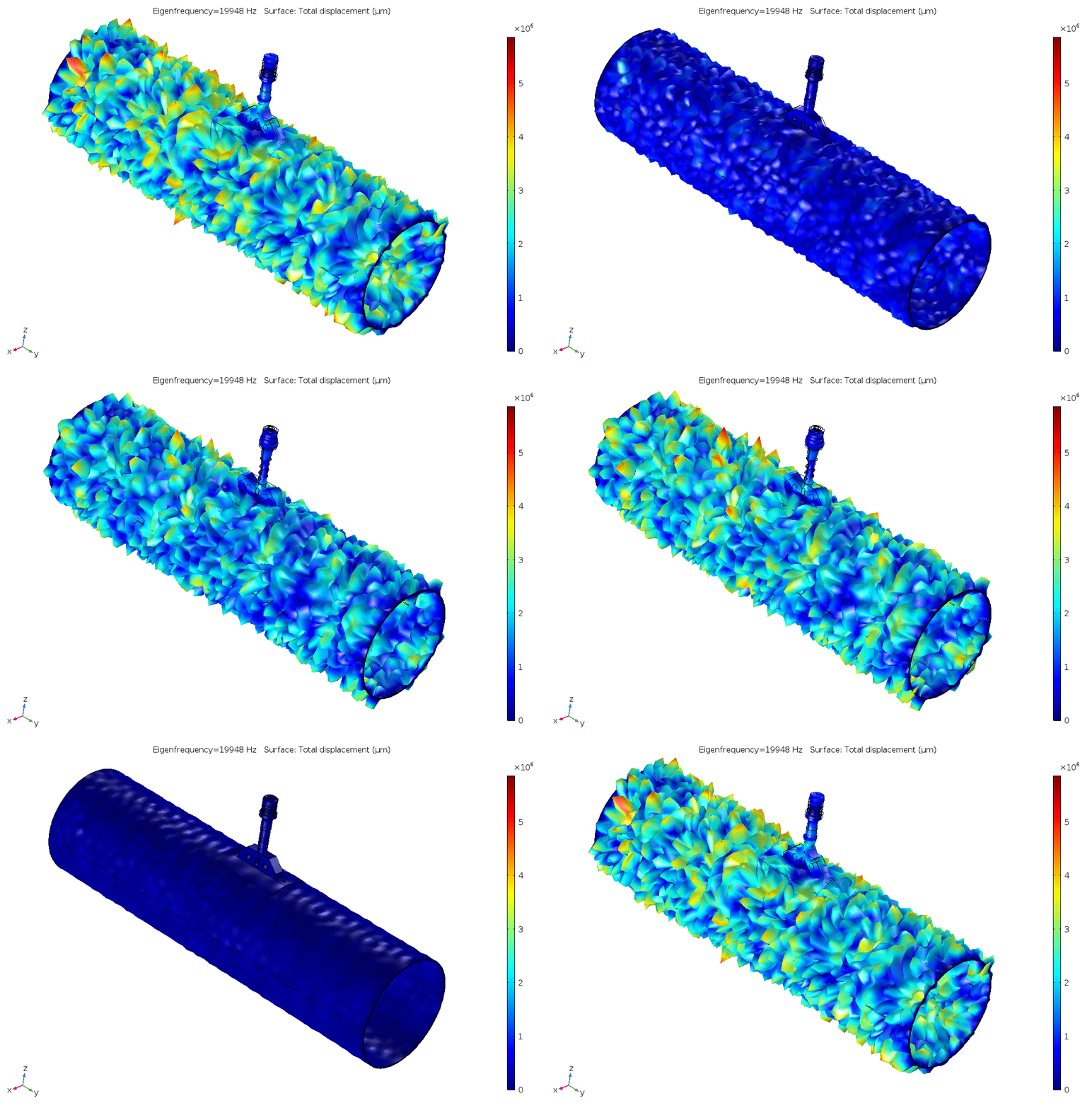
The Synergy of Four Physical Mechanisms
Ultrasonic anti-scaling is not a single effect but a simultaneous interaction of fluid dynamics acoustics and materials science. It couples mechanical erosion with chemical inhibition. The technology creates an environment where scale induction is delayed, deposit mass is reduced and residual formation renders as a loose, none adhesive powder.

1 . Acoustic Cavitation, The Engine
Violent bubble collapse generates shock-wave and micro-jets.

3. Crystallization Modulation, The Modifier
Shifts precipitation from hard Calcite to soft Vaterite.

2. Shear and Streaming, The Scrubber
Impedance mismatches and boundary layer disruption detach soft scale.

4. Particle Agglomeration, The Suspension
Acoustic radiation forces clump fines to prevent adhesion.
Mechanism I: Acoustic Cavitation and Microjet Erosion
Cavitation turns sound energy into kinetic violence at microscopic level, physically chipping away existing scale deposits.
- The Cycle: Sound waves create alternating high-pressure (compression) and low-pressure (rarefaction) cycles.
- Rectified Diffusion: During rarefaction, microscopic vapor cavities form and grow via rectified diffusion.
- Inertial Collapse: During compression, bubbles collapse violently. This event is nearly adibatic, generating localized temperatures of thousands of degrees Kelvin and pressures of hundreds of atmospheres.

Mechanism II: Impedance Missmatch and Boundary Layer Disruption

Section A: Shear-Inducted Detachment
When vibrated, the acoustic wavefront travels at the different speeds through metal and scale. This ‘Impedance Matching’ generates strong shear stress at the interface, causing fatigue and peeling
Section B: Acoustic Streaming
Nonlinear interactions create steady vortices that disrupt the stagnant boundary layer. This constantly refreshes the solution at the wall, sweeping away ions before nucleation.
Even without cavitation, the differential vibration of materials ‘rubs’ the scale off the wall, while induced turbulence starves the surface of scale-forming ions.
Mechanism III: modifying Crystal Morphology
High Intensity ultrasound alters crystallization kinetics and polymorph selection.
Standard Condition (Calcite)

Thermodynamically Stable
High crust
High adhesion
Ultrasonic Irradiation (Vaterite)
Thermodynamically Stable
High crust
High adhesion
Evidence: Citing dynamic test rings, ultrasonic irradiation shifts precipitation toward vaterite. Because these particles are spherical and smaller, they cannot cement together. Cavitation micro-streaming break up ion clusters, dispersing nuclei and preventing large crystal growth. Ultrasound forces calcium carbonate to precipitate as soft, spherical Vaterite instead of hard Calcite, ensuring any deposits are easily washed away by the flow.
Mechanism IV: Acoustic Agglomeration and Suspension

Physics: Suspended particles are subject to Acoustic Radiation Forces (Secondary Bjerknes forces).
Mechanism: Oscillating pressure pushes micro-crystals toward pressure nodes, forcing collisions.
Result: Small fines coagulate into larger flocs that remain suspended in a bulk flow.
Data: Studies of aerosol coagulation show 20 KHz fields can aggregate 2-5 μm particles with > 80% efficiency.
By forcing particles to clump together in the flow, system prevents them from becoming the building blocks of a wall-bound scale layer.
System Design: Tuning the Pipe into a Waveguide

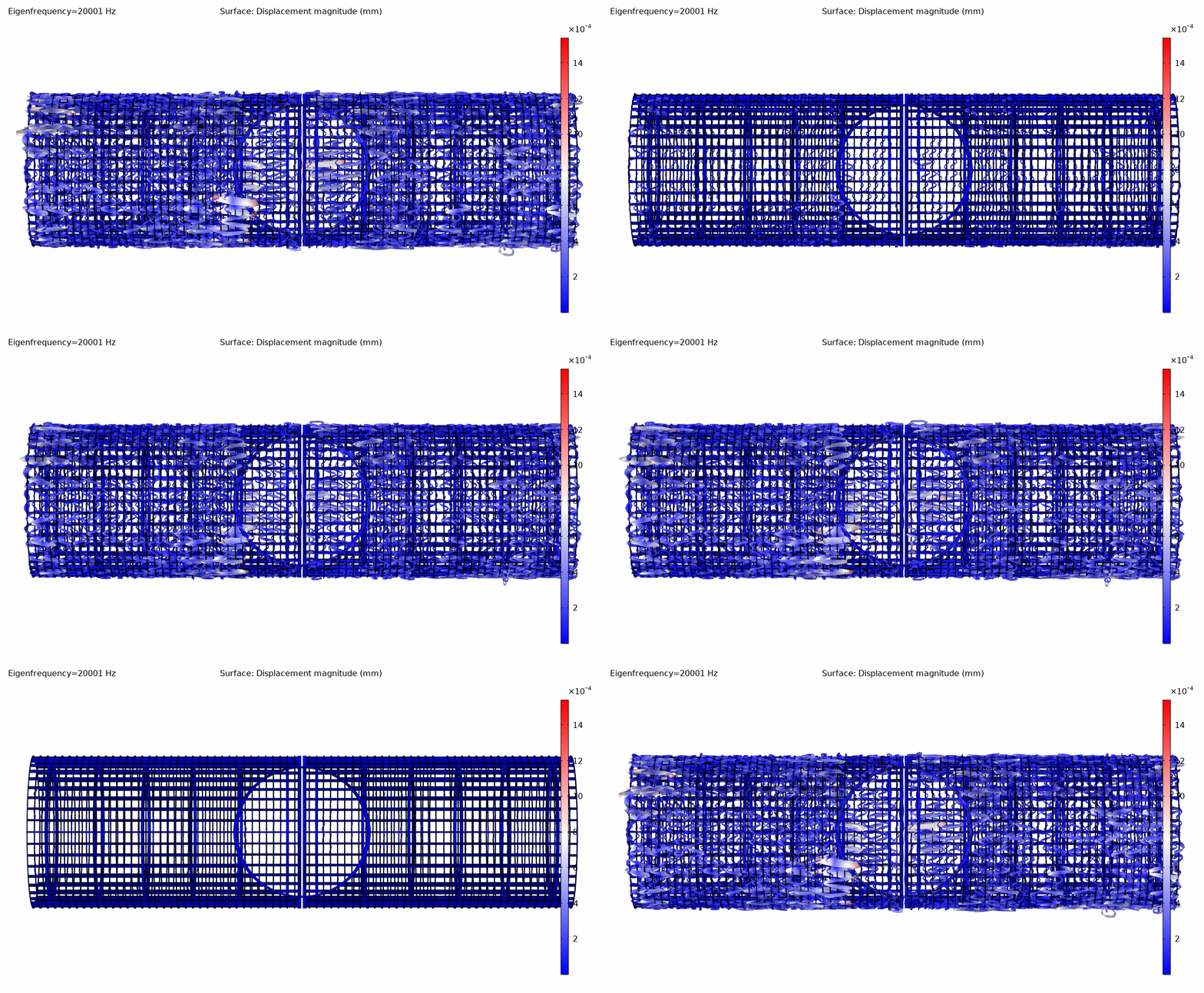
Concept: Efficiency relies on exciting “Structural Resonance”. We do not just vibrate the water; We vibrate the pipe
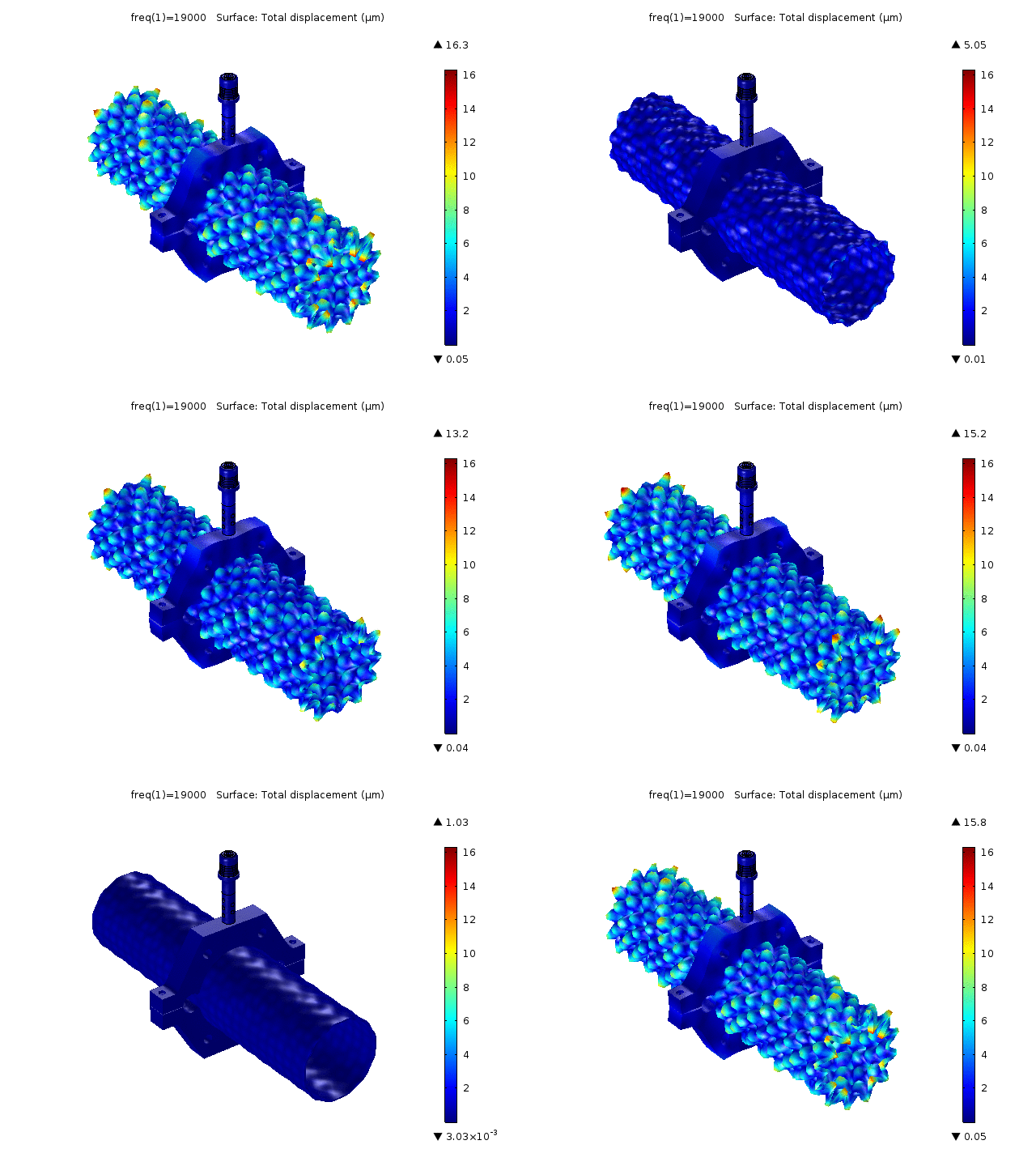
Resonance: Transducers are tuned to match the natural mode of the pipe-fluid system (dependent on length, geometry and wall material).
The Goal: Establish a standing wave. This amplifies the wave amplitude along the entire pipe length.
We treat the pipe infrastructure as an active component of the cleaning system, using resonance to carry energy efficiently over distance.
Guided Waves: Achieving Ling-Range Coverage
Mechanism: Exciting Specific Guided Modes specifically Torsional or Axial waves allows energy to travel inside the cylindrical metal shell with low attenuation.
Proof Point: A study on oil pipelines using piezoelectric transducers to excite torsional waves achieved > 90% fouling removal along a 45° probe angle.

By utilizing torsional guided waves, the system creates a ‘cleaning zone’ that extends dozen of meters from the installation point.
Hardware Implementation: Transducers and Coupling

- Transducers: Piezoelectric or magnetostrictive “stubs” clamped to the pipe exterior. Typically 20-50 KHz.
- The Critical Factor-Coupling: Energy must be transmitted into the pipe, not lost in the backing. Impedance Matching is essential.
- Bandwidth Trade-off: High-Q systems (tight tuning) yield strong peak amplitude. Low-Q systems (damped) cover modes.
The installation is non-invasive and clamp-on, but requires precise impedance matching to ensure the acoustic energy actually enters the fluid stream.
Optimization: Frequency, Power and Pulsing

Fluid Logic: High viscosity or high saturation raises the cavitation threshold, requiring higher power. Degassed/cooler water cavitates more easily. There is no “one size fit all”. parameters are tuned based on fluid viscosity, saturation levels and pipe diameter to maximize the cavitation threshold.
Empirical Performance Data

Qualitative Result: Residual deposits are confirmed to be “loose, none adhesive powder” rather than hard crusts. Lab and field data consistently show scale reduction by an order of magnitude, shifting the material state from “Solid” to “Sludge”.
Application: Oil and Gas Pipelines and Injection

- The Problem: Injection water carries hardness (CaSO4, CaCO3) that precipitates downhole.
- Operation Interaction: Compatible with multi-phase fluids (oil/water/gas). Disperses oil/gas pockets to aid flow.
- Result: Significantly extends the “threshold time” for scale information, delaying or eliminating acid wash interventions.
Provides a non-invasive barrier against downhole scaling, maintaining injection rates without shutting down for chemical squeezes.
Application: heat Exchangers and Desalination

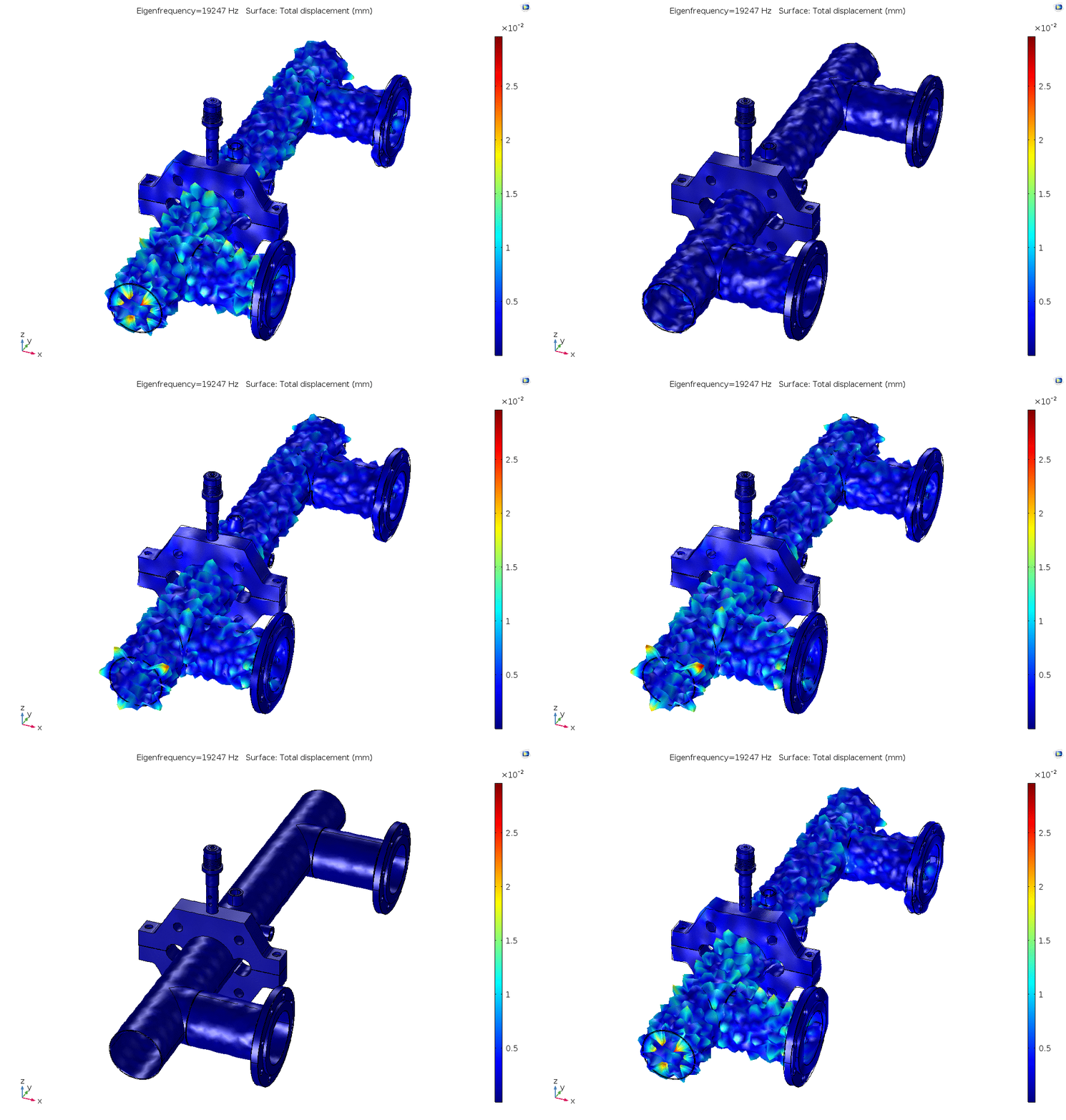
- Heat Exchanger: Transducers attached to shell exteriors. Even a few hours of treatment per day can maintain non-zero deposit thickness on plates.
- Desalination (RO): Inline ultrasonic mixers placed upstream of membranes prevent CaCO3 fouling. Requires corrosion-resistant housings.
Direct protection of heat transfer coefficients, reducing energy costs and cleaning downtime in critical thermal loops.
Operational Advantages and Environmental Safety

Non-Chemical
Elimiates Storage and disposal.
Environmentally benign.

Online Implementation
Installed without cutting pipes or stopping flow.

Low Power
Kilowatt-level consumption (minimal compared to pumping losses).
System Compatibility: Safe for portable water and sensitive process fluids.
Maintenance: Install-and-forget; requires no refills.
A sustainable, ‘install-and-forget‘ solution that replaces OpEx-heavy chemical dosing CapEx hardware solution.
Summary: A Physic-Based Solution to Industrial Fouling
Synthesis: Ultrasonic anti-scaling validates itself through a synergy of Micro-Violnece (Cavitation/Shear) and Macro-Coverage (Guided Waves/Resonance).
The Shift: By leveraging the physical laws of acoustics and fluid dynamics, the industry can move from reactive chemical cleaning to proactive physical prevention.

Proven to remove > 90% of growing scale, the technology represents a fundamental shift in asset integrity management.